-
The Hidden Risk of Using Strong Acid on Tile Surfaces
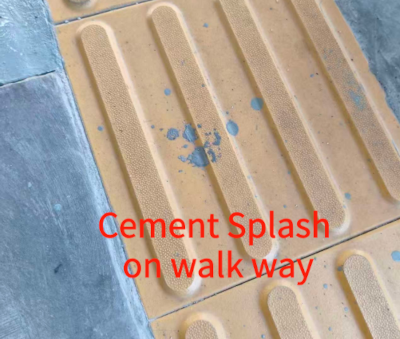
We are aware that cement splash can be irritating, but not many people understand the risk involved when removing the contaminant. If you pay close attention, you can often find small cement splash spots on tile surfaces, especially at sites after construction is completed. Some of the splashes are large in size, but most appear in coin-sized spots. Even though the size is small, they do not look pleasant and often indicate poor workmanship.
Cement residue spots can be easily wiped off when they are newly dropped on the surface. However, once the cement hardens after a day or so, it becomes much more difficult to remove. The cleaning process then becomes tedious unless an appropriate Cement Splash Cleaner is used.
Using an effective Cement Splash Cleaner is essential to achieve proper cleaning performance.
Hidden Risk for Inappropriate Cleaner is Selected
Ordinary surfactant-based cleaners or general surface cleaners are ineffective for removing cement residue sitting on tile surfaces. Many users will then try various harsh methods, such as using strong acid, solvents, or even scrapers in order to remove the unwanted cement spots. From our experience, most common cleaners available in hardware shops are less effective for this purpose. Moreover, by using those chemical solutions improperly, you may be putting the tile surface at risk of damage.
Common Risk User May Over Look
There are several common risks when inappropriate cleaning methods are adopted, such as:
- Acid Burn or acid etch
- Tile colour fading
- Surface scratch
- Safety Concern
Acid Etch
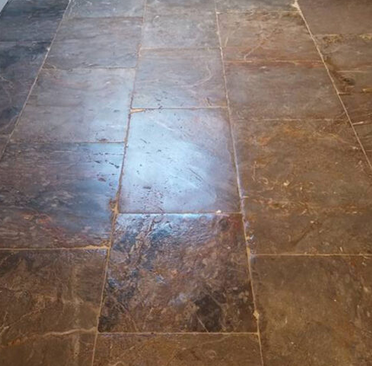
In order to remove cement residue, many hardware shops recommend using strong acids such as muriatic acid or sulfuric acid. However, these non-formulated raw acids may easily lead to acid etch because the operating window is very narrow. The burn is an permanent alternation on the tile surface.
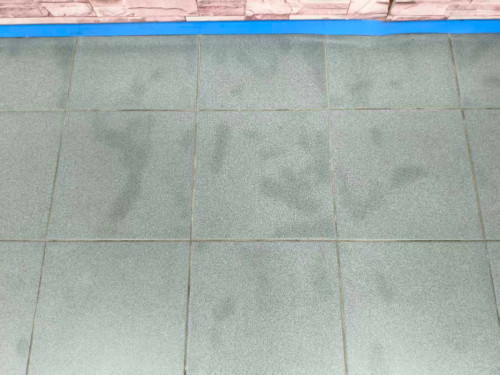
Acid burn commonly appears as patchy discoloration on the tile surface. The patch is not a stain but a mark caused by chemical damage. Because the chemical is too harsh, the tile surface cannot withstand the chemical attack. Once acid burn occurs, removing the burn mark is almost impossible. The user may require mechanical polishing or specialized cleaning methods, which still cannot guarantee the restoration of the original surface condition.
Handling Safety Concern
Strong acids are always hazardous products, and users must strictly follow handling guidelines. Any carelessness may expose workers to safety risks that can lead to serious consequences.
Cleaning activity can be considered a form of engineering work. It requires the proper combination of chemistry and mechanical methods in order to effectively remove contaminants. Relying solely on raw acid solutions not only increases the risk of acid burn, as explained earlier, but also increases the handling risks during the cleaning process.
Minimum Risk to Remove Cement Splash
Removing cement splash is a specialized task. In many cases, users are advised to engage professionals to carry out the cleaning work. Users can always contact EC Clean for further advice.
For professional commercial cleaning teams, there are better choices available than using strong acid directly. A demanding and professional cleaning team may choose our Cement Splash Remover Solution to achieve better and safer results.
A well-formulated chemical solution such as Cement Splash Remover is essential when dealing with cement residue removal. The formulation is designed to effectively break down cement deposits while minimizing the risk of damage to the tile surface.
After understanding the above points, we can see that using strong acids may create more problems than they solve. While cement residue may disappear quickly, the chemical reaction can also attack the tile surface itself, leading to discoloration, surface etching, and long-term deterioration.
For professional cleaning contractors, choosing a properly formulated cement cleaner such as EC Clean Cement Splash Remover is a wise choice. The chemical is designed to break down cement residues effectively while helping to protect the tile surface from unnecessary damage.


Buy at Our Lazada Store